
Home
The Jena Experiment is a DFG-funded Research Unit (FOR 5000) that builds on a long history of biodiversity-ecosystem functioning (BEF) research (FOR 456; FOR 1451). Despite broad consensus of the positive BEF relationship, the underlying ecological and evolutionary mechanisms have not been well understood. The Jena Experiment aims at filling this gap of knowledge by applying novel experimental and analytical approaches in one of the longest-running biodiversity experiments in the world (running since 2002). The central aim of the Research Unit is to uncover the mechanisms that determine BEF relationships in the short- and in the long-term.
News
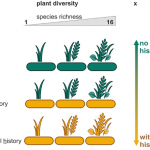 New publication from Albracht et al. in Biology and Fertility of Soils: Common soil history is more important than plant history for arbuscular mycorrhizal community assembly in an experimental grassland diversity gradient April 11, 2024 2:45pm - The relationship between biodiversity and ecosystem functioning strengthens with ecosystem age. However, the interplay between…
 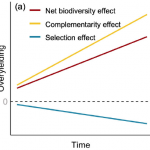 New publication from He et al. in Communications Biology: Cumulative nitrogen enrichment alters the drivers of grassland overyielding April 3, 2024 8:05am - Effects of plant diversity on grassland productivity, or overyielding, are found to be robust to…
 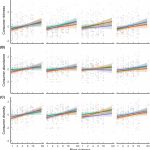 New publication from Bröcher et al. in Basic and Applied Ecology: The positive plant diversity/consumer relationship is independent of grassland age March 18, 2024 8:25am - Plant diversity is an important driver of many ecosystem processes within and among trophic levels.…
 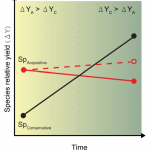 New publication from Zheng et al. in Nature Communications: Effects of plant diversity on productivity strengthen over time due to trait-dependent shifts in species overyielding March 18, 2024 8:20am - Plant diversity effects on community productivity often increase over time. Whether the strengthening of diversity…
 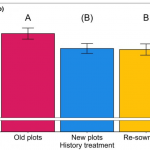 New publication from Dietrich et al. in Global Change Biology: Plant diversity and community age stabilize ecosystem multifunctionality March 18, 2024 8:10am - It is well known that biodiversity positively affects ecosystem functioning, leading to enhanced ecosystem stability.…
 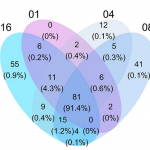 New publication from de Souza et al. in Environmental Microbiome: The seeds of Plantago lanceolata comprise a stable core microbiome along a plant richness gradient February 9, 2024 3:40pm - Seed endophytic bacteria are beneficial to plants. They improve seedling growth by enhancing plant nutrient…
–> More news